What Causes Rosacea Redness
383Category
What Causes Rosacea Redness
You’re not the only one who has noticed that your face is always red, flushed, or has tiny visible blood vessels and wondered what could be causing it. Rosacea is a condition that often causes redness and swelling in the middle of the face. To treat it effectively, you need to know what causes this redness. Many of our patients at NewDermamed are upset about how unpredictable and visible rosacea redness can be, from the cheeks and nose to the chin and forehead. In this article, we’ll talk about what rosacea redness really is, what biological and environmental factors make it worse, how to spot the things that make it worse, and how we treat and manage it in a way that works for each person.
Getting to Know Rosacea Redness
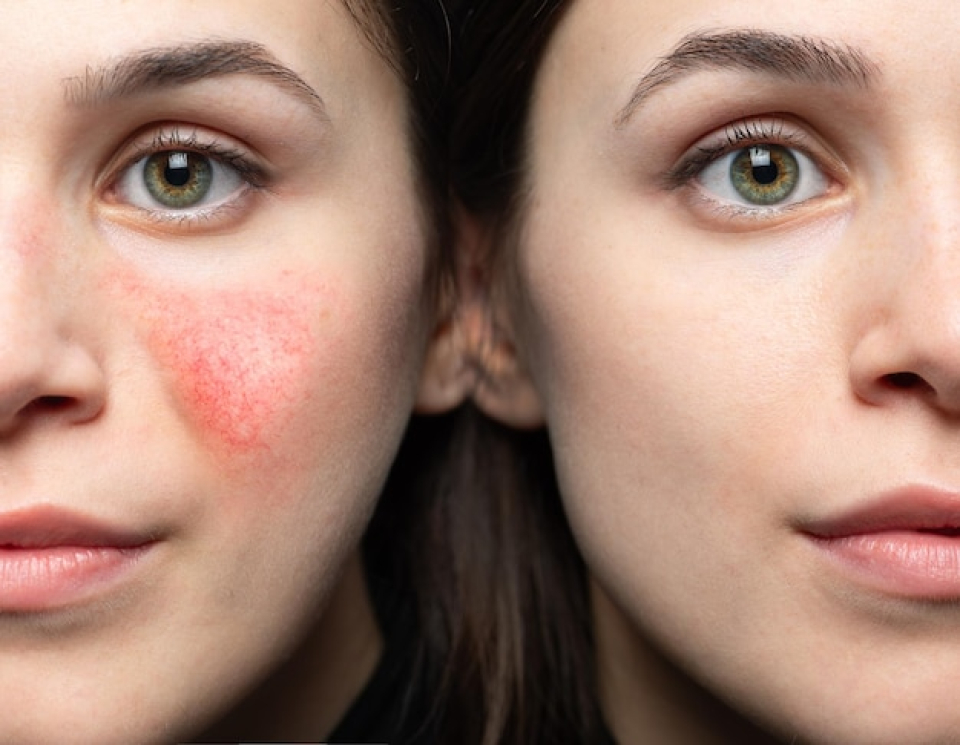
What does rosacea redness look like
Rosacea is a long-term inflammatory skin condition that mostly affects the middle of the face. Persistent redness (erythema) is at the heart of the problem. It is often followed by flushing, visible small blood vessels (telangiectasia), and sometimes bumps or pustules. The flushing can turn into a more constant redness over time, and the skin may feel warm, sore, or sensitive.
What causes the redness
Researchers don’t know what causes rosacea, but they think it has something to do with changes in the immune system, problems with the skin barrier, and things in the environment. To put it another way, the blood vessels in the face may open up and stay open more easily, the skin’s protective barrier becomes more sensitive, and inflammatory processes start more easily. These changes make the redness that we see and feel.
Who gets it and how often does it happen
Rosacea can affect anyone, but it is most common in adults between the ages of 30 and 60. It is also more likely to happen to people with fair skin, though it can happen to people with any skin tone. It seems that men and women are affected in about the same numbers, but the way it looks and how embarrassed or upset they feel may be different. The best way to manage redness is to catch it early, before more serious signs show up.
Main Reasons for Rosacea Redness
Genetic and hereditary elements
There is a lot of proof that rosacea runs in families. If someone in your family has this condition, you are more likely to get it. Your genes may affect how your blood vessels work, how your skin barrier responds to stress, and how your immune system works.
Triggers for vascular and neurovascular
Hyperreactivity of blood vessels and nerve reflexes is one of the main causes of rosacea redness. In a lot of people with rosacea, the blood vessels in their facial skin open up too easily when they are exposed to heat, alcohol, spicy food, or the sun. This causes redness and flushing. Also, some receptors in the skin may be too active, which means that your skin will react more strongly to things that normal skin would ignore.
Immune and inflammatory processes
Aberrant immune responses also contribute. Some individuals with rosacea exhibit elevated immune proteins, heightened inflammatory markers, and, in certain instances, an overpopulation of skin mites such as Demodex, which may provoke inflammation. These immune factors can make the redness last longer and make the skin more sensitive.
Problems with the skin barrier
The condition of the skin’s barrier is also very important. When the skin barrier is damaged by the sun, harsh skin care, stress from the environment, or age, the face is more likely to get irritated, and flushing can become a permanent feature instead of a brief blush.
Skin connections between microbes and the gut
New research shows that some microbes, like skin mites and even an imbalance of gut bacteria, may be linked to rosacea. Even though bacteria don’t directly cause redness, they can make inflammation and blood vessel responsiveness worse, which can make the redness worse or more frequent.
Things in the environment and your lifestyle that can cause problems
External triggers are a big reason why rosacea makes the skin red. These don’t cause rosacea directly, but they can make the skin flare up and get redder in someone who is already prone to it. Some things that can set off an outbreak are being in the sun, being in very hot or cold weather, being in the wind, drinking alcohol, eating spicy foods, drinking hot drinks, being stressed out, working out hard, and some skin care products. Knowing what makes you red is an important part of managing it well.
Understanding How Redness Shows Up
Flushing and redness that comes and goes in the early stages
At first, redness might come and go in bursts or episodes. You might blush more easily, and your face might get warm and red after something happens, but then it goes away. This is often the first sign of rosacea.
Constant redness and visible blood vessels
As the condition gets worse, the flushing episodes may turn into a more permanent redness. You might be able to see small blood vessels just under the skin. At this point, the redness is harder to get rid of, so you need a plan to deal with it.
Changes and problems that are more serious
In cases that have been going on for a long time, the redness may be accompanied by bumps, pustules, thickened skin, especially on the nose, and even eye involvement. A bulbous nose from thickening tissue and long-term redness is one of the most obvious signs of advanced disease. So, it’s important to act quickly while the redness is still manageable.
Recognizing Your Triggers and Redness Patterns
Common trigger types
To lessen the redness of rosacea, you need to know what makes it worse. Some of the most common things that set them off are:
- Sunlight or UV rays
- Spicy foods and hot drinks
- Drinks with alcohol, like red wine
- Very hot and very cold weather
- Stress from emotions
- Working out and doing hard physical work
- Products for skin care or makeup that make the skin red
- Wind, heat, humidity, or heating or cooling systems inside
Writing down your triggers
We tell our patients at NewDermamed to keep a simple diary of their flare-ups. Write down what you ate or drank, the weather, the skincare you used, how you felt emotionally, any alcohol you drank, and how your skin reacted. You can see patterns over time. You can avoid or lessen your high-risk triggers once you know what they are. This will make redness less common and less severe.
Knowing how people are different
Keep in mind that what makes one person red may not make another person red. Some people are more sensitive to food, while others are more sensitive to temperature or skin care. Personalized tracking and management are the most important things.
How Newdermamed Treats Rosacea Redness
Step 1: A full evaluation of the skin and its history
At NewDermamed, we start by learning about your skin type, your history of redness or flushing, your family history, and how you live your life. We figure out how much of the redness is caused by changes in blood vessels and how much is caused by inflammation or problems with the skin barrier. This helps us make a plan that fits your specific reasons for being red.
Step 2: Managing your lifestyle and triggers
From day one we focus on nonmedical strategies such as strict daily sun protection with SPF, gentle skincare that avoids fragrance and irritants, identifying and avoiding known personal triggers, and supporting the skin barrier with soothing ingredients. These basic steps help lower the redness baseline and make any medical or procedural treatments work better.
Step 3: Medical and topical treatments
If the redness is mild, we may suggest topical medications like azelaic acid, metronidazole, or brimonidine, which narrow blood vessels. If the redness is more severe, we may suggest ivermectin. Low-dose doxycycline and other oral medications can also help because they reduce inflammation. If you have blood vessels that are more visible or redness that won’t go away, vascular-targeted therapy like laser or intense pulsed light (IPL) can help a lot.
Step 4: Advanced therapies and procedures
Vascular laser therapy or IPL can help calm down redness that won’t go away by targeting superficial blood vessels and making them less visible. We always talk about realistic outcomes and ongoing care because rosacea tends to last a long time and needs to be cared for all the time.
Step 5: Maintenance and follow-up
We stress long-term care at NewDermamed because rosacea is a long-term condition. If you’ve had laser or IPL therapy, we keep an eye on your redness, change your plan for avoiding triggers, go over your medications, and set up maintenance sessions. We want to keep the redness down and the skin healthy and calm.
Helpful Tips to Calm Down Rosacea Redness
Gentle skin care and help with barriers
Avoid scrubs and harsh exfoliants, and use gentle, non-foaming cleansers. Look for moisturizers that have ceramides, niacinamide, and panthenol in them to help protect your skin. Stay away from things that have alcohol, menthol, or a strong smell.
Keep the sun and the outside world from hurting your skin
Every day, put on sunscreen with an SPF of 30 or higher. When you’re outside, wear a hat or find some shade. Use a scarf or protective cream to protect your skin when it’s cold or windy.
Be careful about what you eat and how you live
Write down the foods and drinks that make you red in a trigger diary. Common culprits include spicy food, hot beverages, alcohol, and caffeine. Relaxation or mindfulness can help you deal with stress, since emotional flushing is a real trigger. If hot baths or saunas make your skin flare up, stay away from them.
Pick your skincare and makeup carefully
Use makeup that is made with minerals and is safe for sensitive skin. Choose brands that dermatologists recommend and don’t use too many active ingredients at once. Add new products slowly and test them on a small area first when you can.
Get professional help as soon as possible
If the redness doesn’t go away or makes you feel less confident, get help from a professional. At NewDermamed, early diagnosis and treatment are very important for avoiding long-term problems.
Why It’s Not Just About Looks
Rosacea’s constant redness is more than just a cosmetic issue. It shows changes in the biology of your skin, like how blood vessels work, how your immune system works, how your skin barrier breaks down, and how sensitive it gets. If you don’t treat it, the redness can get worse and show up as visible vessels, thicker skin, and even eye problems. Your skin’s health and appearance will stay good if you treat it early and consistently.
Conclusion
To get calmer, clearer skin, you need to first understand what causes rosacea redness. At NewDermamed, we think that dealing with redness needs a careful, individualized plan that includes changes to your lifestyle, gentle skin care, and, when necessary, medical and laser therapy. Our staff is committed to helping you feel good about your skin again with treatments that are right for your skin type and way of life. Call NewDermamed today to set up your consultation and start your journey toward healthier, more radiant skin if you’re ready to take charge of your redness.